PARAMEDIC EDUCATION
EMT EDUCATION
Paramedic Class Information
Prerequisites
- HS Diploma, GED, or certificate of higher learning
- Current Michigan EMT license or NREMT certification
- Current AHA BLS for Healthcare Provider
- Clear background check and 10 panel drug screening
- Passing score on pre-test
Occupational Risks to Emergency Medical Services (EMS) professionals
EMS workers face many potential job hazards including but not limited to:
- Injury from lifting patients and equipment
- Exposure to infectious diseases
- Handling hazardous chemical and body substances
- Vehicle collisions
- Post-traumatic stress disorder (PTSD) from exposure to traumatic events
- Violence/assaults
- Verbal threats/aggression
- Sprains and strains
- Hyper/hypothermia
Program Goals
To prepare Paramedics who are competent in the cognitive (knowledge), psychomotor (skills), and affective (behavior) learning domains to enter the profession.
Course Offerings
Asynchronous/Hybrid
Through interactive lectures, weekly discussion boards, online assignments and a weekly in-person lab, this 15-month guided, self-study course prepares the student to deliver emergency care to acutely ill and injured patients. The program includes an anatomy and physiology component and will focus on a deeper understanding of assessment and history taking; pharmacology, including the mechanism of action, metabolism, and excretion of medications; electrophysiology of the heart; complicated and uncomplicated delivery of newborns; assessment and treatment of traumatic injuries; and other topics. ACLS and PALS certification are offered during the course:
- Didactic/Lab= 662 hours
- Clinical/Field Experience= 250 hours
- Capstone Field Internship= 250 hours
Traditional in-person course
This 15-month instructor-guided didactic course prepares the student to deliver emergency care to acutely ill and injured patients. The program includes an anatomy and physiology component and will focus on a deeper understanding of assessment and history taking; pharmacology including the mechanism of action, metabolism, and excretion of medications; electrophysiology of the heart; complicated and uncomplicated delivery of newborns; assessment and treatment of traumatic injuries; and other topics. ACLS and PALS certification are offered during the course.
- Didactic/Lab= 654 hours
- Clinical/Field Experience= 250 hours
- Capstone Field Internship= 250 hours
Tuition and Fees
Tuition: $9995.00
- 1st half due by orientation
- 2nd half is due by midterm
Tuition includes ebook, software system(s), uniform shirt, and a voucher for the 1st attempt at the NREMT Paramedic exam.
- FREE tuition and stipend payments are available for Superior Ambulance Service employees in exchange for a 2 year contract. Contact us to see how you can become an employee today!
- GI Bill funds are accepted
- Financial aid is not available
Accreditation Status Statement
Life Support Training Institute Consortium for Paramedic Education is accredited by the Commission on the Accreditation of Allied Health Education Programs (www.caahep.org) upon the recommendation of the Committee on the Accreditation of Educational Programs for the Emergency Medical Services Professions (CoAEMSP).

727-210-2350 | www.caahep.org
To contact CoAEMSP: 214-703-8445 | www.coaemsp.org
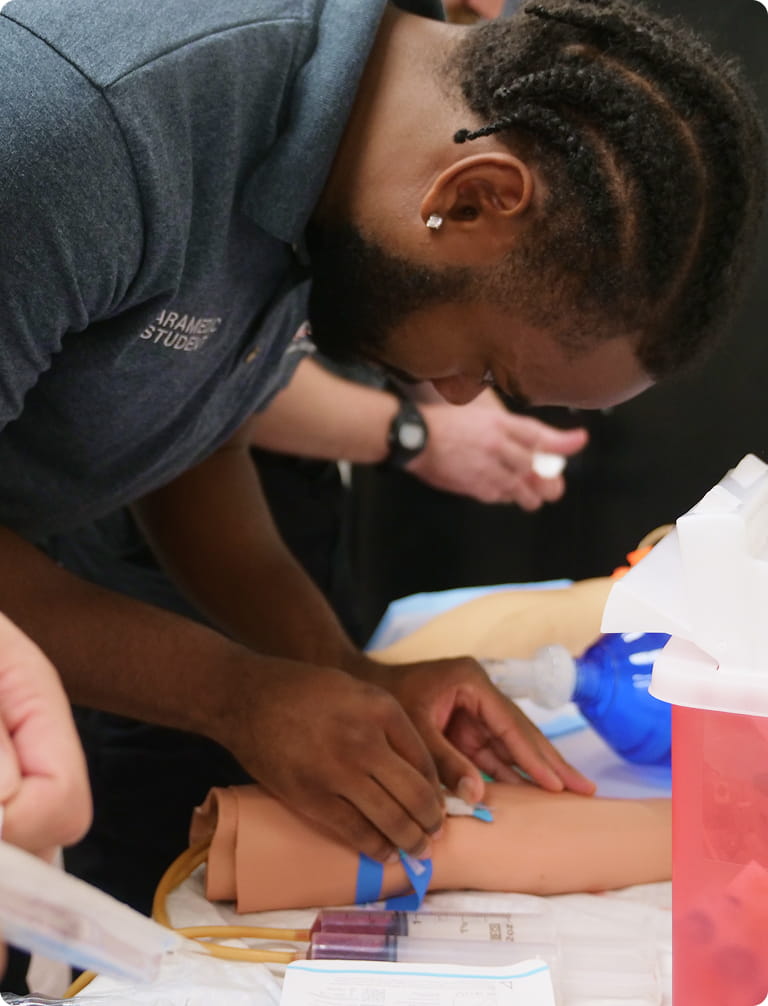
EMT Class Information
Course Topics
- Airway Management
- Cardiac Emergencies
- Pharmacology
- Pediatrics
- Trauma
- Obstetrics
- And More
Tuition and Fees
All materials are covered by Superior Ambulance Service (SAS). There is no cost for the selected students to attend the class unless they are unable to fulfill the full-time employment tenure outlined in the Student Agreement.
Program Goals
We are looking for highly motivated and self-driven candidates to join the EMS Industry. Our 280-hour class will provide hands-on training that will assist prospective candidates with obtaining their National Registry of Emergency Medical Technicians (NREMT) and state licenses.
Course Offerings
In-person, 2-3 weekdays a week.